
The first thing you do at the table is choose between traditional moju and seasonal moju. If it's your first visit, it can be hard to tell which suits you, so here is a quick guide.
Traditional moju tastes the same all year
Traditional moju is made with the base ingredients only: cinnamon bark, jujube, licorice root and the rest, simmered into a deep amber drink. It tastes the same whenever you visit, so it's a good choice if you want to know what moju is supposed to taste like.
Seasonal moju adds what the season brings
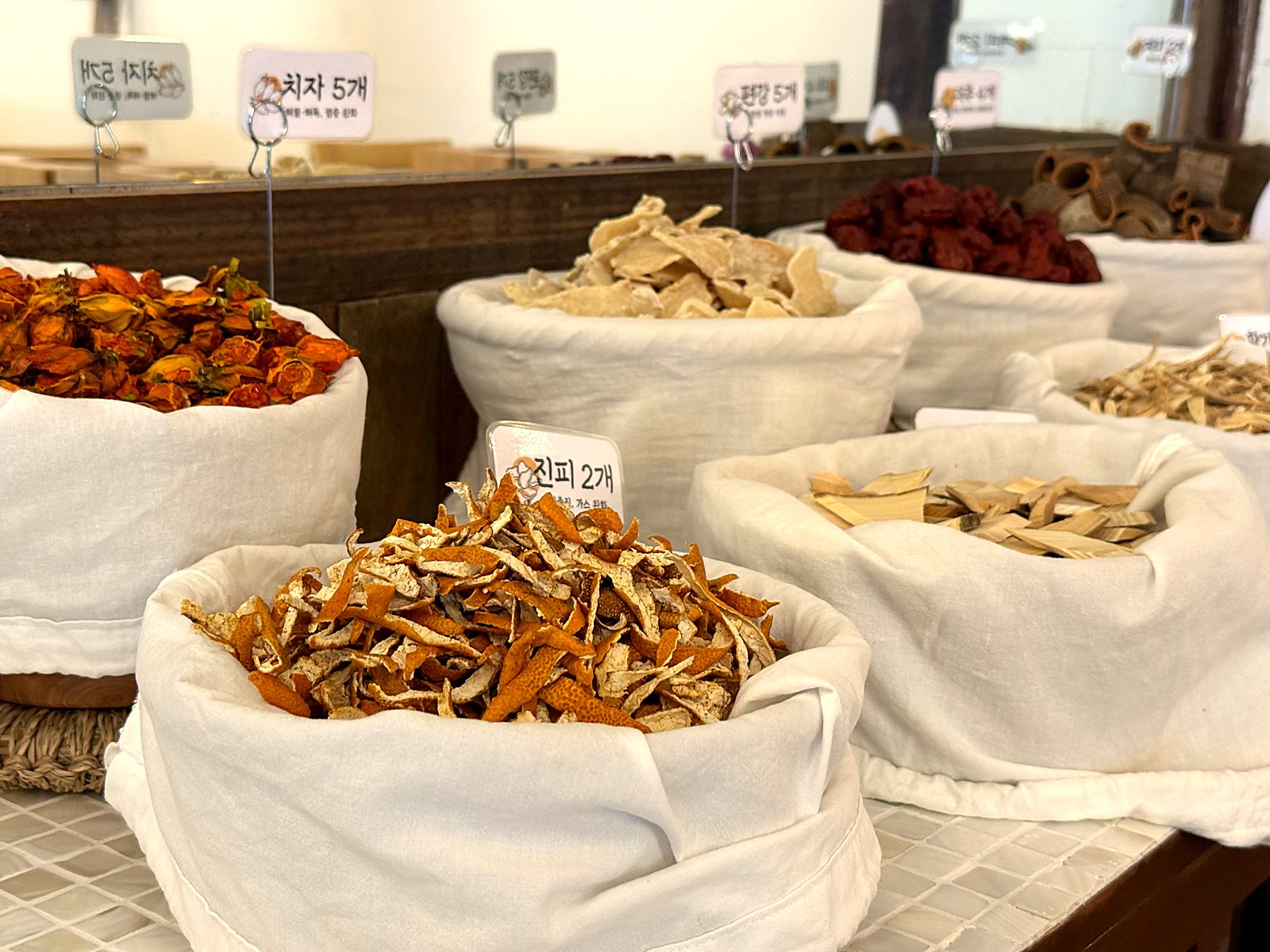
Seasonal moju starts from the same base and adds ingredients that belong to the month. Spring takes beetroot and raisin-tree fruit, summer takes ginseng and raisin-tree fruit, and autumn takes gardenia fruit and dried tangerine peel. Winter will take cornelian cherry and smilax root, but it's still in preparation. We'll post a news item when it begins.
Right now it's the golden autumn one
This season's moju gets its color from gardenia fruit and its aroma from dried tangerine peel, which gives it a golden tint. The color alone sets it apart from the traditional one once it's in the bottle.
How to choose
If you're curious about the original taste, pick traditional. If you'd like something you can only get this time of year, pick seasonal. The price is the same either way, ₩30,000 per person, and you can read the little tags on your tray before you decide. If you only want a bottle without the experience, both are ₩17,000 for 500ml.