
Ingredients
What's in the basket today
The question we get most from overseas guests is about the ingredients: what is this, and why is it in here? Translation apps can't even name most of them, so here they are. Six that go into every moju, and two the season decides.
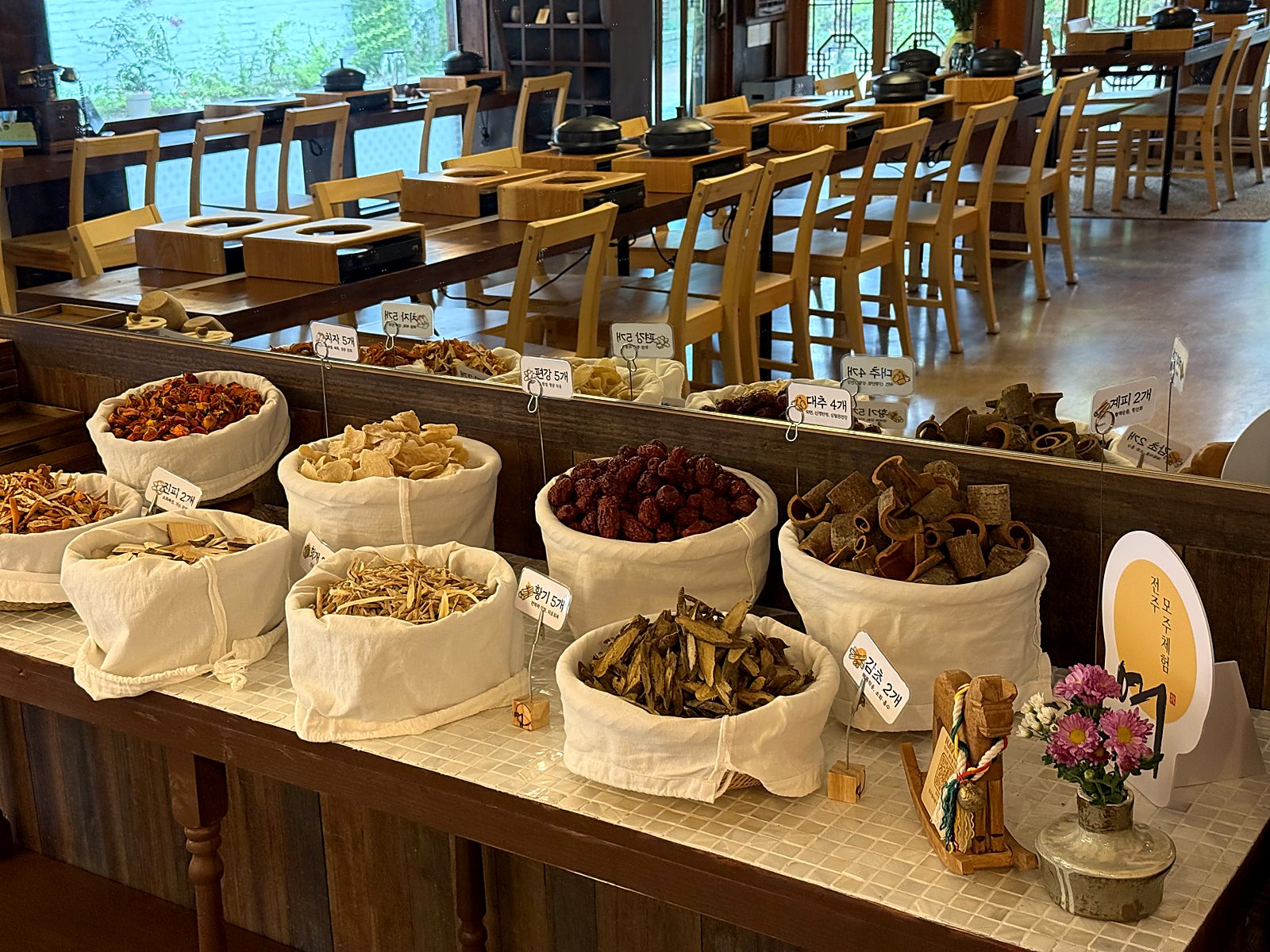
Base
The base — in every moju
Each one-person tray is filled with the amounts from Moju Yeo's own recipe.
- Cinnamon bark 桂皮 계피 · gyepi The backbone of moju. Most of what you smell when the pot starts to simmer is this. traditionally taken to warm the body and settle the stomach
- Candied ginger 片薑 편강 · pyeongang Thin ginger slices simmered in sugar. Fresh ginger needs blanching to take the bitterness out; candied ginger has already been through that, leaving only the warmth. ginger is traditionally used for a calm stomach and warmth
- Jujube 大棗 대추 · daechu Never left out of moju. It adds a soft sweetness and is a fruit Koreans have traditionally reached for in cold weather. traditionally taken to ease tension and tiredness
- Licorice root 甘草 감초 · gamcho Literally "sweet root." It ties the other flavors together. In Korean, "the licorice in the apothecary" means someone who fits in everywhere. traditionally used to soothe the throat and soften the other herbs
- Astragalus root 黃芪 황기 · hwanggi The root Koreans put in samgyetang, the summer chicken soup. A staple of hot-season cooking here. traditionally taken to build stamina
- Dark brown sugar 黑雪糖 흑설탕 · heukseoltang Added last, and only a little. It gives moju its deep amber color and rounds out the sweetness the licorice root starts. Add it early and both the color and the taste change.
These are traditional uses, not medical claims.
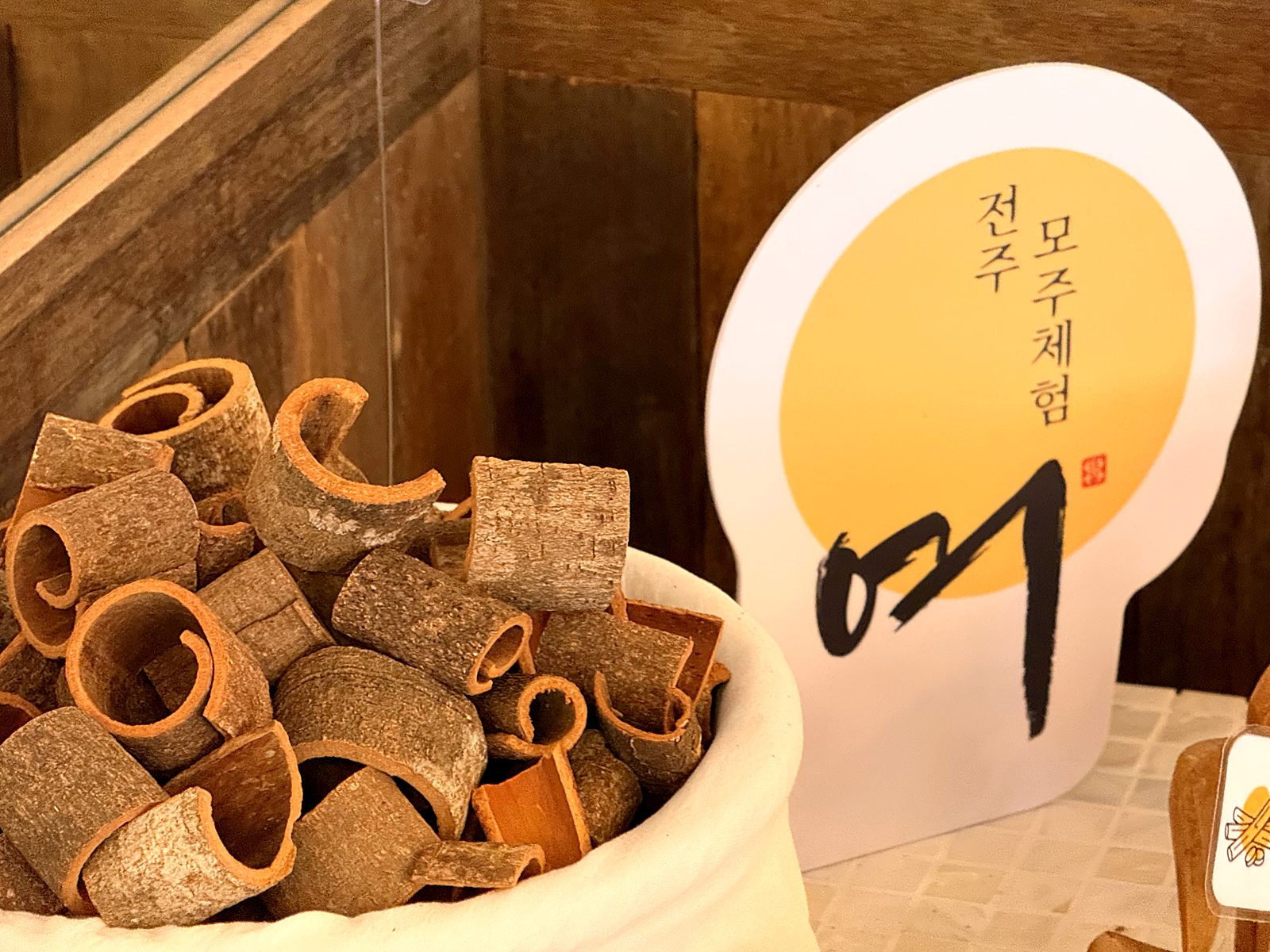
Seasonal
Seasonal — a different moju next season
Traditional moju tastes the same all year. Seasonal moju doesn't. Spring turns pink with beetroot, summer takes ginseng, autumn turns yellow with gardenia and tangerine peel. Koreans have long changed what they eat with the season; seasonal moju puts that habit in a cup. We started it in spring 2026.
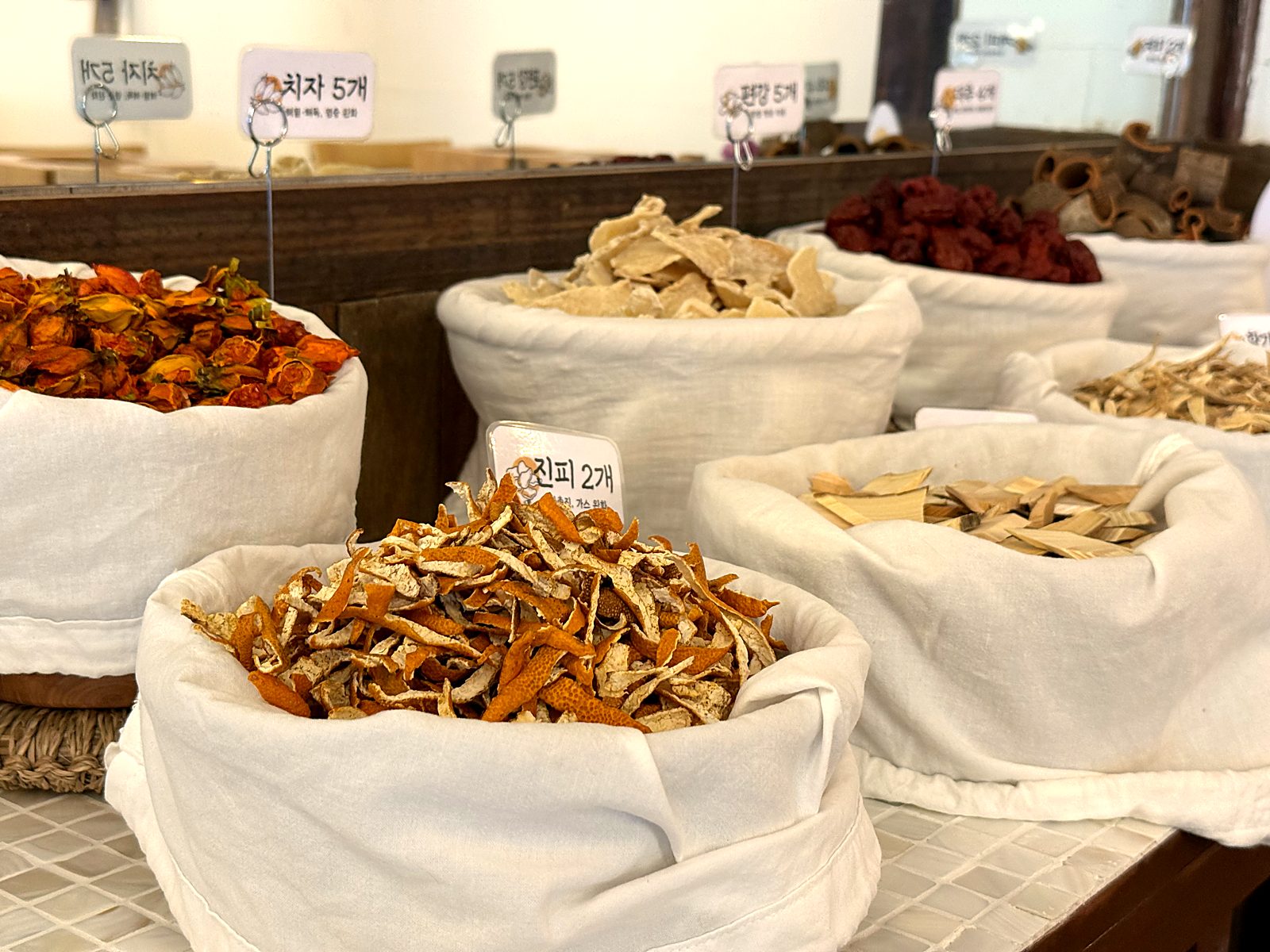
Autumn — the golden oneNOW
Gardenia for the color, tangerine peel for the aroma. Autumn moju is the six base ingredients plus these two.
- Gardenia fruit 梔子 치자 · chija The fruit Koreans use to color food yellow. Autumn moju gets its color from it. traditionally taken to cool the body and calm the mind
- Dried tangerine peel 陳皮 진피 · jinpi Dried tangerine peel. Its citrus note keeps autumn moju light. traditionally used to aid digestion
Summer — ginseng moju
Summer's seasonal moju is ginseng moju: ginseng plus raisin-tree fruit. Some younger guests find it strong, so traditional moju is always an option.
- Korean ginseng 人蔘 인삼 · insam The star of summer moju. Its slightly bitter aroma keeps the sweetness in check. traditionally taken for energy
- Raisin-tree fruit 헛개 · heotgae A mildly bitter fruit, commonly brewed as tea in Korea. It goes into the spring moju too. traditionally taken the morning after a drink
Spring — the pink one
Spring moju takes beetroot and raisin-tree fruit. The beetroot turns it pink, and the "dyeing" ingredients are also the pattern on one of our labels.
- Beetroot 비트 · biteu Gives spring moju its pink tint. traditionally taken for the blood
- Raisin-tree fruit 헛개 · heotgae A mildly bitter fruit that keeps the beetroot's sweetness in check. traditionally taken the morning after a drink
WinterCOMING
Winter moju is still in the making. Come back for its first winter.
These are traditional uses, not medical claims.
At your table
The one-line version
For when you're reading this on your phone at the table.
Base (every moju) — Cinnamon bark · Candied ginger · Jujube · Licorice root · Astragalus root · Dark brown sugar, last
This season — Autumn: gardenia · tangerine peel / Summer: ginseng · raisin-tree fruit / Spring: beetroot · raisin-tree fruit
Simmer twice. Add the sugar at the very end. Bottle, label, done.