
When you sit down to brew, a tray is waiting at your place with everything measured out to our own recipe. Six of those ingredients go into every bottle, whichever moju you choose. Most of them are Korean pantry and herbal-shop staples that translation apps struggle with, so here is what you're looking at.
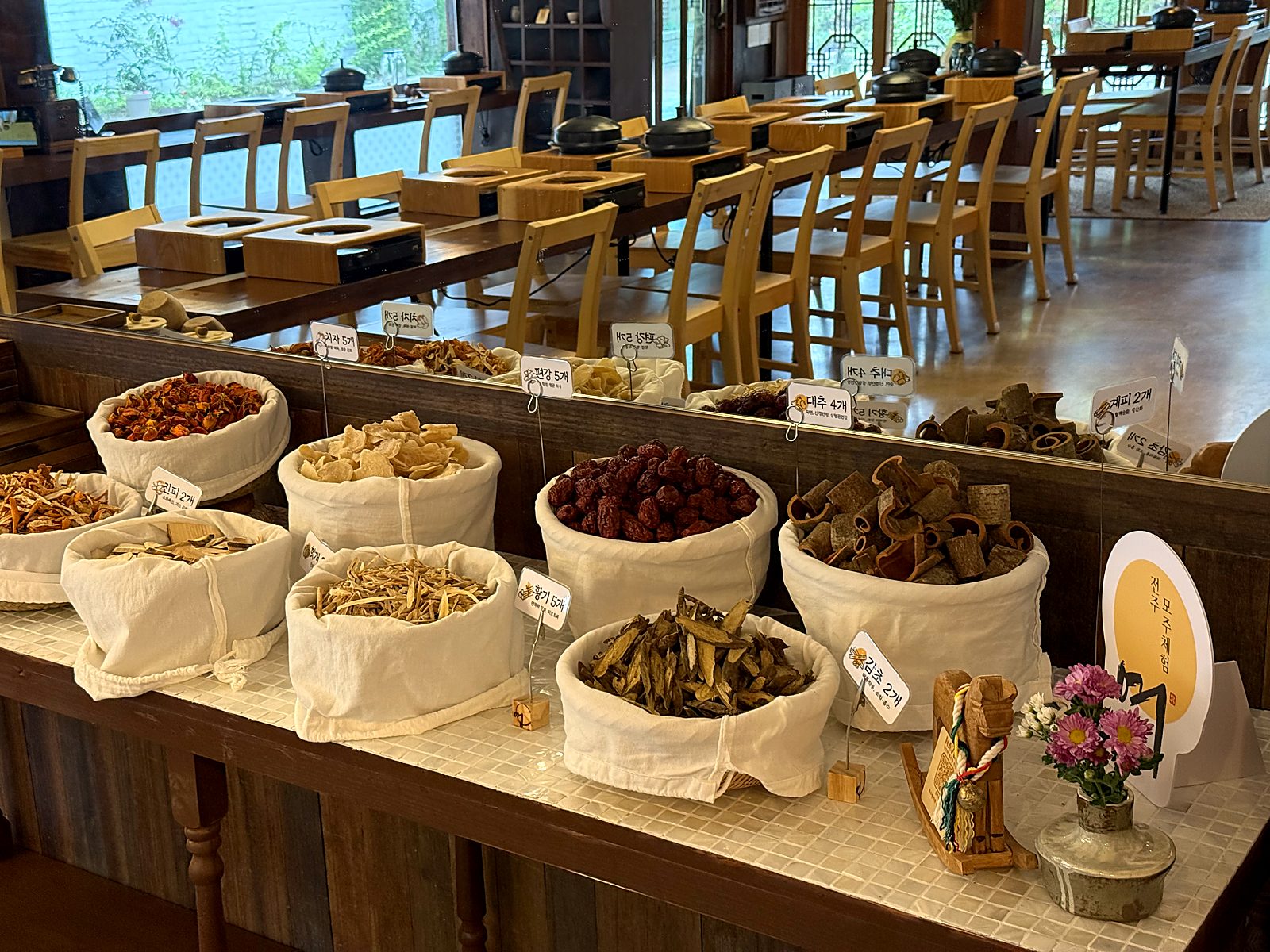
Cinnamon bark · gyepi
The backbone of moju. When your pot starts to steam, the first thing you'll smell is this. Koreans have traditionally taken it to warm the body and settle the stomach.
Candied ginger · pyeongang
Thin slices of ginger simmered in sugar. Fresh ginger has to be blanched first to take the bite out; these have already been through that, so you get the warmth without the harshness. Ginger is traditionally used for a calm stomach.
Jujube · daechu
The dark red fruit, sometimes called Korean red date. It brings a soft, rounded sweetness, and it's what Koreans have long reached for when the weather turns cold. Traditionally taken to ease tension and tiredness.
Licorice root · gamcho
The name means "sweet root," and it's the ingredient that pulls the others together. Koreans call someone who turns up everywhere "the licorice in the apothecary" for exactly that reason. Traditionally used to soothe the throat and soften the other herbs.
Astragalus root · hwanggi
If you've had samgyetang, the ginseng chicken soup Koreans eat in summer, you've tasted this root. In moju it goes in all year round. Traditionally taken to build stamina.
Dark brown sugar · heukseoltang
This one waits until the very end, and only a little goes in. Makgeolli on its own simmers to a pale beige; the sugar gives moju its deep amber color and fills in the depth the licorice leaves behind. Add it too early and both the color and the taste change, which is why it's the final step.
If you pick the seasonal moju
Seasonal moju adds two more ingredients on top of these six. Right now, in autumn, that's gardenia fruit and dried tangerine peel, which turn it a golden yellow. Winter moju, with cornelian cherry and smilax root, is being readied. The ingredients page has photos of everything, handy to open on your phone at the table.
These are traditional uses, not medical claims.